I am back in physical therapy for the stubborn left shoulder that won’t fully heal following surgery. My therapist has given me a series of targeted exercises. Some are repeats of those I did after surgery last year; some are new. All will go into a folder marked “shoulder,” which sits within a larger folder called “PT.” In there are also maneuvers for hip, ankle, and lower back. These are presented in drawings, photographs, and instructions for at least thirty distinct exercises.
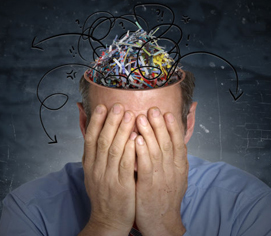 I don’t take this folder to the gym, of course. Instead, I’ve tried to memorize every one of these, with limited success. After all, I also need to remember to do them every day–and to sit up, stand up, lift my head up, roll my shoulders back, pick up my feet—in short, apply my brain to the conscious maintenance of a body challenged by the passing of time.
My brain has other things to do as well: rewrite the first half of my new novel by the end of the month, walk and feed my dog, take out the garbage, plug in and check on the basement dehumidifier, pick up a prescription, arrange for a ride to the airport, prepare to present in front of a book club, take my vitamins. This while I’m trying to remember where I put my iPad or what I went upstairs to fetch.
I have an online calendar for the important appointments that the Cloud shares with my 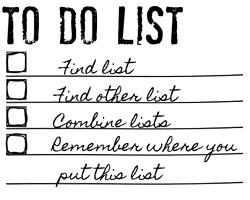 devices. I also make lists. If I start more than one, something I almost always do, I must remember to blend the two and compare them with whatever I’ve written online. I suppose I could have Alexa or Siri or Gaga (my name for Google Assistant) remind me but I don’t yet trust technology to make distinctions between “buy fence for back garden” and “buy plastic border for front garden.”
It’s a lot to ask of an aging intelligence—or is it?
Research about the older brain has been a roller coaster ride of good and bad news for at 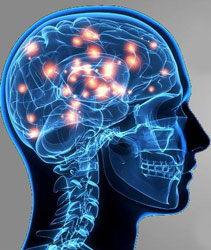 least forty years, according to an article in Newsweek that summarized more recent findings. In September of 2016, Harvard Health Publishing wrote that although we naturally lose brain cells as we age, we can grow new ones. Then, in March of this year, research published in the journal Nature indicated scientists could find no new neurons in adult brains. The next month, Cell Stem Cell published a study showing that we can potentially continue to make neurons in the hippo-campus until we’re almost eighty. The factors include the aforementioned exercise, a healthy lifestyle, enriched environment, and social interactions.
As to the last, the National Institute on Aging says “Social relationships are consistently associated with bio-markers of health.” They are also the hardest to maintain, owing to the natural isolation seniors encounter. Absent meaningful work and/or close family, struggling with mobility issues and grappling with feelings of purposelessness and irrelevance, older people find it challenging to build or keep relationships.
I’ve got the exercise and healthy lifestyle down, thanks to a dog and a bike. I consider books and engagement with arts and politics to enrich my environment, not to mention the lovely home I’m fortunate enough to own. Social interactions are trickier. I’m a widow engaged primarily in solo endeavors like writing, which means I’m constantly out of practice. While I am expressive and articulate on paper and, I hope, online, I’m far more introverted than most people realize.
Without a doubt, though, socialization is probably the single most effective antidote to 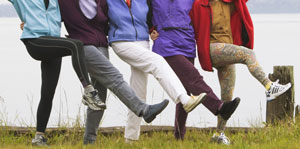 pain and depression I’ve ever encountered. I recently spent two days in the company of a group of wonderful women I first met online. I walked miles and forgot about my aching shoulder, back, hip, etc. We ate and drank and laughed and hugged. I’m still riding the afterglow.
 What this suggests is I have even more to add to my to-do list. Somewhere between “schedule doctor” and “buy paper towels” and “finish chapter three,” I need to remind myself to text or email or message or call a friend and make a plan. It’s not just about maintaining friendships. It’s about strengthening your brain.
 You see them after every tragedy: the husbands, wives, mothers, fathers, friends, and colleagues who have lived through what is an unimaginable event for most people. Somehow, instead of hiding away, they are out front, dealing with the inevitable mash of cameras, microphones, journalists, bloggers, well-wishers, and hangers-on. To add to their suffering, they must deal with entitled opinionistas, naysayers, trolls, and the genuinely ugly folks who feel compelled to issue threats via social media.
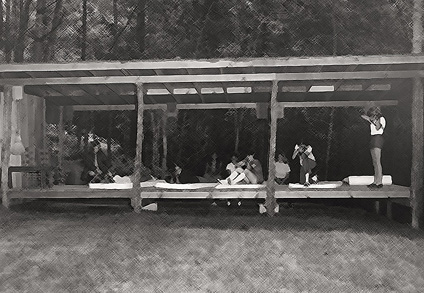 At 7:30 a.m. on a summer morning, the northern Wisconsin air did not yet hint at the promise of another typically beautiful day. Our twelve-year-old selves, denied the future pleasures of hot coffee, had stoked ourselves with pancakes and bacon.