Dec 222021
 

So. December was a month, right? Just as you think maybe you have everything under control, wham! Something (or a series of somethings) comes around to smack you in the face.

The holidays are rarely easy for anyone, never mind the Hallmark-type ads that fill our screens. The stress of gift-buying, the desire to make everything as memorable as possible.

Still, many of us were planning to go all-out after a year and a half in isolation. And many of us still are, notwithstanding a variant of the small spiky enemy that continues to pummel us. I hope everyone remembers to exercise caution.

I got a lot done this month. I published a book and not one but two audio version of earlier books. Big accomplishment. And yet I’ve dragged through the weeks, burdened by lost light and lonely evenings. There’s a lot to miss in December. I was married in the middle of the month but the man I wed is no longer with us. My beloved sister died just after Thanksgiving two years ago. The pandemic makes getting to remaining scattered family challenging.

Oh, and over the past month or two I’ve seen three orthopedic surgeons for intractable pain in my shoulders. The verdict is in: Bone on bone, or what they call “end-stage arthritis.” I’ve had physical therapy, injections, acupuncture, massage, etc. Nothing to do for it but replace it. I still have nearly full use of the shoulders, discomfort notwithstanding. Eventually, I will not. Now gives me the best chance of full recovery. Or does it?

I scheduled surgery for the last week in January. Without the sister who always had my back and with all the attendant anxiety that such a surgery plus the pandemic plus December can bring. Five weeks in a sling, a one-armed woman in a two-story house with a lively elderly dog with stair issues. Sitcom material, right? Or not.

I posted about it on Facebook, a piece of personal information of the sort I am usually reluctant to share. And my friends responded with offers to fly or drive in to cook or drive or watch over me and my dog.

Say what you will about Facebook; it has provided me with a robust and diverse community. Fully half of my 800 friends are writers, which in and of itself is pretty remarkable, and half of those are people I met on one site. Among them I have found people with similar quirks, habits, concerns, outlooks, and issues. Few of them live close by, which is tough. On the other hand, all of them are accessible one way or another.

The kindness reinforces my awareness that it–by which I mean survival in one form or another–takes a village. Easy to forget until you get older or more isolated or somehow disconnected. The young and the strong can perhaps go it alone. The rest of us have no choice but travel around, knock on doors, and ask for what we need. It would seem people are far more generous than we’ve been led to believe. At least that’s what I choose to believe, even on the days I despair for humankind.

Fate is not so accommodating. Covid threatens to blow all the good intentions and careful plans out of the water. This surgery may not take place right now, either by the hospital’s choice or by mine. I’m not about to ask anyone to pass through two major airports for a joint replacement.

But whenever it happens–and it will happen–I feel a little more confident asking for assistance. at some point, that may involve a paid helper. For now, it would seem that with a little effort on my part, I can locate the members of my makeshift village or even forge new friendships in order to both give and receive  give comfort and aid.That’s a worthwhile holiday gift to unwrap any way you look at it.
Nov 102021
 

Freeze Before Burning: A Sam Tate Mystery is the third book in the Sam Tate Mystery Series and will be released December 8th.


Ed Rizzo slid his ample body into the ornate confessional, crossed himself, and pushed a strand of thinning hair off his forehead. “Forgive me, Father,” he intoned, “for I have sinned, although I’m pretty sure God will cut me some slack even if my wife won’t, if you take my meaning.”
At ten in the morning, the sanctuary was deserted. Good. He didn’t need anyone listening to his confession, which he unloaded to the figure who sat beside him in the confessional over the next ten minutes.

Even as he talked, he considered who might be on the other side of the grate. Rizzo couldn’t make out the features of the man. He wondered if he’d landed the new priest. Maybe a younger person would make light of his transgressions, which mostly related to his perfectly legitimate reaction to his obnoxious neighbor, Frank Pagonis.

Rizzo had his justifications lined up. He hadn’t survived more than a year of enforced quarantine with three kids and a demanding wife, never mind the missing paycheck for a while, only to put up with the stolen newspapers, a lawn mower returned with a bent blade, and a television loud enough to wake the dead.

“But when his dog, which, by the way, he refuses to leash and that’s against the law, went and dug up my tomato plants, yeah, I sprayed some stuff on whatever the mutt left. Not enough to kill the animal, you understand. He can’t help it if he has a jerk for an owner. I would have sprayed his owner’s food if I could have. The point I’m making is, the dog got sick, but it didn’t die, okay?”

Rizzo cocked his head, thinking he might have heard a faint sigh.

“Now he’s coming around with a pile of vet bills and talking about suing me. I told him to take his threats and shove them. I tell you, Padre, I am this close to beating that smug face or maybe twisting that scrawny neck of his. My wife claims that kind of thinking is sinful. I don’t think it’s as bad as doing the deed. I haven’t told her about poisoning the dog, but sparing her the details isn’t the same as lying, is it?”

Nothing. The guy had probably fallen asleep. The confessional was stuffy, and Rizzo experienced a touch of claustrophobia. Time to move things along.

“If you can just suggest a penance to perform, I’ll get it covered. Then I can be on my way.”
He stopped talking, suddenly aware of the silence, how absolute and enveloping it was. The noises of the city street outside had receded. He could hear himself breathing.

“Hey, Father? You all right in there?” Rizzo scratched the grill dividing the two sides of the confessional. His head was pounding now, and he felt vaguely dizzy.

“I know I’ve been yakking a lot. How about we wrap this up, okay?” Again, no response. It occurred to Rizzo that the other man hadn’t said a word the entire time. What if the good father had suffered a heart attack?

He hoisted his bulk off the narrow bench and pushed himself out of the tiny space. The other side of the confessional had its own entrance. He rapped on the door, then tried the handle, more out of instinct than anything else. It turned in his hand, and he pulled.

The black-garbed figure sat with head bowed, hands folded in his lap as if in prayer or contemplation. Or asleep. Rizzo put a tentative hand on the man’s shoulder. With a sigh like a punctured balloon, the black-robed figure tipped sideways off the bench, fell to the floor, and rolled like a blow-up toy.

Startled, Rizzo jumped back. Stay cool, he told himself.

He bent over with an umph and put two fingers to the priest’s throat to search for a pulse. He expected to feel cold, not the scalding heat that burned his skin.

“Jesus Christ!” he yelled, forgetting for a moment where he was. He waved his blistered hand in the air and hopped around until a wave of nausea stopped.

With his foot, he nudged the body so that it rolled onto its back. He stared, speechless for once, at the face of the priest. Then he stepped farther back, pulled out his cell phone, punched in 9-1-1, and gave his report to the dispatcher in a calm, measured tone.

He agreed to wait for the police and medical authorities just outside the church. He even accepted the suggestion that he might dissuade others from entering until help arrived.

Without looking again at the body of the priest, Ed Rizzo crossed himself. He walked slowly to the front door, stepped into the fresh air, and threw up.


Information on the Sam Tate Mystery Series can be found here.

To pre-order this book, click here.

Oct 252021
 

I receive requests for this original short story every year at this time. I happily comply.

The all-purpose table had been cleared of dinner dishes and now held four pumpkins, two knives, six magic markers, and several squat orange candles. Claire had switched off the harsh overhead fluorescent and dragged two lamps in from the living room, hoping to create the right atmosphere.

“Mom, Becca’s doing it wrong.” Sadie’s whiny voice cut through the stuffy kitchen air like a dentist’s drill. She glared at her older sister.

“Shut up, brat. I’m making art.” Becca had carved out a single baleful orb and was assessing her work. Her own eyes, heavily lined and shadowed, cut to her mother.

“What? All the 7th grade girls are doing it.”

Guilt is surely a child’s most potent weapon, thought Claire, rubbing a spot between her eyebrows. She exhaled slowly, maneuvered the knife away from her youngest son’s exploratory little hands and forced a smile.

“Let Becca do her thing, Sadie. How’s your pumpkin coming along?”

“Wanna cut, Momma.” Robby was leaning out of his high chair, reaching for the knife. Claire slapped a marker and a smaller pumpkin in front of him.

“Draw a face.”

“It’s not right, Becca,” Sadie persisted.

“I’ll do this dumb pumpkin any way I want, cretin.” Becca waved her hand in dismissal. “I can’t help it if you lack imagination.”

“Mom!”

“Girls . . .”

“Becca’s not doing it the way Daddy showed us!”

“Duh, he’s gone, idiot!”

“You’re the idiot!”

Robby, alert to any discord between his two sisters, chimed in with a plaintive wail. “I wanna Dadda punkin! Want Dadda punkin now!”

“QUIET!” Claire pounded the table, sending knives and markers flying. The children froze, stunned into silence by her outburst and by the single tear that hung precariously from the corner of her eye. She regarded them bleakly: restless older daughter, resentful middle child, and a small boy suddenly marooned among so many injured women.

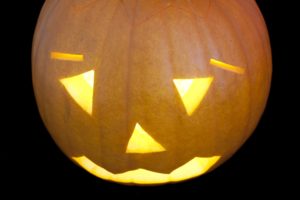
“Here’s how we’ll do it,” she said firmly. Picking up a knife, she made a series of shallow cuts on the remaining pumpkin to indicate a face. She worked quickly, her labors informed by years of medical training and months of suppressed grief. Within a few minutes, she had the outlines of an expressive-looking face whose sad eyes belied its wide smile. She stood back, feeling oddly satisfied. Robby clapped his hands.

“Good punkin.”

They laughed.

“I like your pumpkin idea, Mom,” Becca ventured.

“Me, too,” her sister added.

Our pumpkin,” Claire told them. “We’re in this together.”

all-purpose table had been cleared of dinner dishes and now held four pumpkins, two knives, six magic markers, and several squat orange candles. Claire had switched off the harsh overhead fluorescent and dragged two lamps in from the living room, hoping to create the right atmosphere.

“Mom, Becca’s doing it wrong.” Sadie’s whiny voice cut through the stuffy kitchen air like a dentist’s drill. She glared at her older sister.

“Shut up, brat. I’m making art.” Becca had carved out a single baleful orb and was assessing her work. Her own eyes, heavily lined and shadowed, cut to her mother.

“What? All the 7th grade girls are doing it.”

Guilt is surely a child’s most potent weapon, thought Claire, rubbing a spot between her eyebrows. She exhaled slowly, maneuvered the knife away from her youngest son’s exploratory little hands and forced a smile.

“Let Becca do her thing, Sadie. How’s your pumpkin coming along?”

“Wanna cut, Momma.” Robby was leaning out of his high chair, reaching for the knife. Claire slapped a marker and a smaller pumpkin in front of him.

“Draw a face.”

“It’s not right, Becca,” Sadie persisted.

“I’ll do this dumb pumpkin any way I want, cretin.” Becca waved her hand in dismissal. “I can’t help it if you lack imagination.”

“Mom!”

“Girls . . .”

“Becca’s not doing it the way Daddy showed us!”

“Duh, he’s gone, idiot!”

“You’re the idiot!”

Robby, alert to any discord between his two sisters, chimed in with a plaintive wail. “I wanna Dadda punkin! Want Dadda punkin now!”

“QUIET!” Claire pounded the table, sending knives and markers flying. The children froze, stunned into silence by her outburst and by the single tear that hung precariously from the corner of her eye. She regarded them bleakly: restless older daughter, resentful middle child, and a small boy suddenly marooned among so many injured women.

“Here’s how we’ll do it,” she said firmly. Picking up a knife, she made a series of shallow cuts on the remaining pumpkin to indicate a face. She worked quickly, her labors informed by years of medical training and months of suppressed grief. Within a few minutes, she had the outlines of an expressive-looking face whose sad eyes belied its wide smile. She stood back, feeling oddly satisfied. Robby clapped his hands.

“Good punkin.”

They laughed.

“I like your pumpkin idea, Mom,” Becca ventured.

“Me, too,” her sister added.

Our pumpkin,” Claire told them. “We’re in this together.”