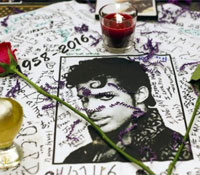
 The recent death of pop icon Prince was greeted with the usual outpouring of shock and grief, along with a fair amount of snark. The negative commentary was directed not at the dead musician, but at the people who expressed profound sadness. The naysayers criticized both the misdirection of the emotion (why aren’t you crying over the deaths of innocent refugee children?) and the shallowness of the feelings expressed. “Crying over Prince’s death?” one person wrote. “Really? You people care more about the death of a pampered rock star or an old dog than you do about a starving family in Africa.”
Harsh—and not necessarily true.
 The thing is, on my social media and news feeds there are plenty of laments about social conditions around the world, along with a few—too few—suggestions for action that might help those who are suffering. The history of human cruelty is long and ugly. My sorrow about this is systemic; I feel it in my bones. Even on my most hopeful days, I fear manmade brutality may be a permanent condition.
That’s separate from the jolt inspired by the death of a public figure. Which is to say, you can grieve deeply for someone you didn’t know. It even makes sense.
I’m old enough to remember the death of John F. Kennedy. I hurt for weeks. My sorrow linked to my fear. I worried about everything from nuclear annihilation to the idea that someone my father’s age could die so suddenly and senselessly.
Nearly forty years later, my husband died on 9/11. I was so wrapped up in the immediacy of my pain that I couldn’t understand or welcome others who wanted to participate in my bereavement. Some of my anger involved the public spectacle that accompanied the deaths: the endless displays, the incongruity of Teddy bears, the presumption of some of the would-be mourners, the relentless pursuit of “human interest” stories by members of the media.
Now every tragedy, from mass shootings to traffic deaths, seems to call for temporary memorials. It can get wearying.
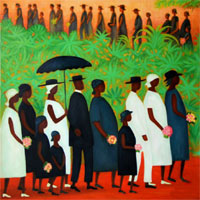 Behind the pageantry, though, is a ritual as old as humankind. We mourn publicly and collectively because death is a lonely process. It terrifies us, especially when it’s unanticipated or takes someone young. We reach out for emotional support. We commiserate to connect. We shake our fist at Death from the safety of a group.
Westerners may watch state funerals for Middle East dignitaries and react with horror to the public hysteria. Diana’s death unleashed a spectacle of communal lamentation that caught many by surprise and continues to this day. It can also come across as senseless. All of us have stories of friends or relatives who couldn’t cry at the funerals of their husbands or fathers—then when a certain movie star died, they couldn’t stop crying.
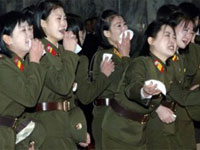 Try as we might, we can’t compel others to grieve as we would. My personal preference is to grieve hard but in private. Some people may throw themselves in the dirt at graveside. Some spend years draped in sadness. Some jump back into the business of living more quickly or more slowly than others believe is warranted.
Grieve in peace, or as loudly as you must. There is no single way to mourn.
 our comments as well as our purchases. We affect and are affected by everyone else. We participate in and succumb to group-think. Everything we like, buy, rate or consume is quantified and measured. The results are used to determine what is offered to us, whether it’s commentary or the latest must-have thing.
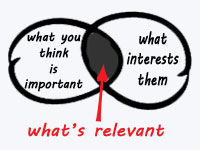
 The older we get, the less clear we are about how to be relevant or even how or where we might connect to what matters. Children grow up and move away. Spouses and siblings die. We are eased out of jobs and into a life of enforced leisure marked by secret struggles or stretches of isolation.
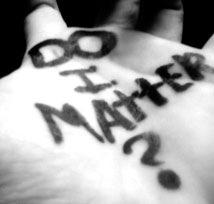 We’re trying to connect. We want to count or be counted. That’s what it’s all about. Somebody cares, somebody needs us, somebody is listening to us. We want to influence something, no matter how small that something is. That’s what floats our boat, gets us up in the morning, and makes us smile. I matter, you matter; we matter.