“Where are you? I’m standing in front of your door, ringing the bell.”
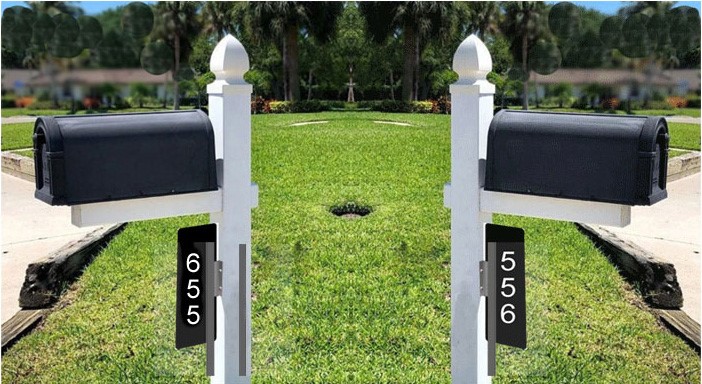
“I don’t see you, Hannah,” I replied. Did you turn left on Sawyer Rd? I’m the third house on the left. White house with blue shutters and a pot of pansies out front. The address is 655. It’s on the post box. You can’t miss it.”
My sigh blew through the phone, clearly displeasing my friend.
“No, I turned right and now I’m at the third house on the right unless you’re standing at the end of your cul-de-sac. I see everything you’re describing, even your red Alset in the driveway. What I don’t see is you.”
“My what? Never mind.” I fought the urge to sigh again. So like Hannah to confuse even the simplest directions. “What’s the address where you ended up?” I asked. “I’ll direct you back to 556 Sawyer.”
“Girlfriend, I have your address at 655, and that’s the house whose porch I’m standing on this very moment. I’m not being a ditz, by the way. You put that address into my contacts ages ago. Oh, wait, hey. I see you in the window. See? I’m waving. Now, let me in.”
I went to open the door. Ten steps from the living room, and yet I could swear I walked through something first, a membrane or an invisible vortex that spun me around like a blindfolded kid in search of the piñata. I decided I’d been reading too much science fiction.
The vertigo disappeared, returning two seconds later as I stuck my head out the door. The path to my backyard was to my right. The one-car garage was to my left. That was backward. I glanced across the street. The houses in my development resemble one another, but homeowners add their touches. The Patels’ lilac bush was to their door’s left. That was new. The Conners’ car was parked in the driveway, which seemed to have switched from one side of the house to the other. Meanwhile, Sawyer Rd, the main drag, had also relocated, confirming that the view I expected, my view, had reversed.
I turned to look at the numbers above my door. 655. What the hell?
Hannah waited while I struggled to orient myself. She looked remarkably refreshed. No, more than that. Way more. Several decades younger, with tight skin, trim body, and perky breasts. Her dulled and silver-streaked hair had been restored to its former vibrant red.
“Do you plan to let me in or are you just going to stand there gawking?” she demanded.
“Sure,” I managed to stammer. “Did you go on a spa vacation or a time-travel adventure?”
Hannah giggled, even though the quip was not especially clever. I tend to use humor to mask my discomfort. In this instance, I was far beyond uneasiness and headed straight for anxiety. I took a deep breath and turned back into my house to see that it had changed.
My kitchen was now to the right, my sunroom to the left. The stairs to the second floor had moved over as if by magic. At least Alice, my sweet eleven-year-old ginger, was right where she always was, lying in the sun that came through the picture window, now repositioned to catch the morning light. If she noticed anything different, she wasn’t letting on.
Hannah walked into the living room and pointed to the couch. “Sit down, Em,” she ordered. “You look a little pale. Bet you missed breakfast again. I mean, I’m gone for ten days …never mind. Let’s get you something to eat.”
I plopped onto my familiar corduroy sofa. While Hannah fussed around in the kitchen, I thought about looking at my iPad. That promised to be a brain-buster. Instead, I headed to my bookshelf and yanked down my edition of Gray’s Anatomy. A cursory glance assured me that, at least according to this book, basic human anatomy hadn’t changed. Even better, the book read front to back, the sentences left to right.
I did notice that my copy of Goodnight Moon, a gift from one of my friend’s grandkids, had been renamed Moon, Goodnight. That was true of several other books on the shelves.
I sprinted back to the couch and collapsed onto it. Alice took the opportunity to make herself at home in my lap. At least she hadn’t changed.
“You okay in there?” Hannah called out from the kitchen. “Sorry, it’s taking so long. Looks like you moved some things around.
My stomach clenched. “Take your time,” I choked out. The words sounded strangled. My heart rate accelerated, and my brain went into overdrive. I think that was the order of events. What did I know anymore? Maybe time itself was running backwards. In which case, what did “take your time” even mean?
Calm down, I ordered myself. Breathe first, then think.
The admonition worked. My blood pressure dropped, my senses quieted. I needed to stay contained, observe only what was around me, at least until I could figure out what was going on. I hadn’t quite stepped or been tossed through the looking glass. That is, I wasn’t in an exact mirror image of my former reality. Some things were different—flipped, to be more precise. Some were not. I couldn’t yet tell what had been affected. The alterations could have been limited to a couple of book titles and street addresses, a house layout here and there. Or had entire cities been switched around and mountain ranges moved? What about concepts, ideas, or theories? Were those backwards? Had black become white and up down? Was I here temporarily or permanently? Why was any of this happening?
I started panicking again. Discipline, Emme, I chided myself. I could be bossy when the occasion arose, which has helped in my thirty-six years as a middle school teacher. I was no scientist or mathematician. I did pride myself on being intensely practical, however. I liked puzzles. I would figure this out.
What was the same, I asked myself? The sun was still in the sky, cloudless today, and a lovely cerulean blue. I wore my usual day-off attire of leggings and an oversized sweatshirt. My watch appeared to work. The date was exactly as expected, which suggested I wasn’t in some future time. The house looked the same, except for the reversal part. Same furniture, same view, albeit not where I remembered it from the night before.
Hannah, too, seemed the familiar, if bizarrely de-aged. I clung to the notion that she’d gone for fairly radical and, I had to admit, top-quality surgery.
So far, the changes I’d noted seemed indiscriminate, random. Possibly a dream. I’d already pinched myself. A bruise was beginning to form, which suggested I was very much awake and here, wherever that was.
Maybe I’d been drugged, but when? I’d spent the previous day alternately cajoling and threatening students into learning. This was followed by an evening of middle-brow television and an early bedtime. I loved my work, and I felt privileged to be teaching at such a forward-thinking school. I just felt tired, a consequence of being within two years of retirement age. Sixty-three was supposed to be the new fifty-three, was that it? I couldn’t remember. It could have been the state of the world itself that made me soul-weary. An affliction common to my friends.
I decided to pursue the idea that this was a prank, perhaps engineered by an earthbound human with an AI partner. Unless the perpetrator was some sort of deep space entity. I’d always been a devout agnostic, reasoning that the universe contained untold truths it was unlikely to reveal to us. On the other hand, based on the little exploration we humans had conducted, I was persuaded that we were neither the largest nor the smallest life form out there.
I suddenly recalled a popular Stephen King book (please be Stephen King in this world, I prayed, and not Kingston Stephens) called Under the Dome. A single community suddenly found itself enclosed in a clear but thoroughly impenetrable dome, completely cut off from the outside world. No one and nothing could get in or out. People became ill. Some died, some went mad. In the end—spoiler alert—the more intrepid citizens and their scientist friends on the outside figured out they were part of a game conducted by a child-like figure.
What if a non-human equivalent of a young prodigy or a disaffected teenager had created this universe as, let’s say, a school project? The notion seemed equally fraught and whimsical.
If in this domain we were nothing but game pieces, would we have any choices, any agency? On the other hand, wasn’t the concept of free will overrated in the world I’d left? I sometimes believed so. I’d engaged in my share of arguments about how to best persuade people to higher moral ground—to vote, to participate, to show empathy, to be better. I’d begun to wonder, after so many years, how humans with good intentions could expect to prevail over humans inclined to give in to their base instincts.
Hannah emerged from the kitchen with a tray of tea and cookies I’d stashed on the top shelf so I could pretend they weren’t there.
“This should help,” she said, setting the tray on my coffee table. “Why are you looking at me like that?” She’d caught me staring.
“You must know you look amazing.”
“Thanks. I’m the same old me.”
“How old are you?” I suddenly asked.
“Same age as you, lady. No getting around it.”
“And that would be …”
“Um, thirty-six, as you well know. Which means we’re closing in on forty, but we have time.”
I jumped off the couch and sprinted to the mirror in my foyer. There I was in all my glory—or should I say former glory. Firm neck, clear skin, no wrinkles, only a very few lines around my bright hazel eyes. Dark, thick brown hair with a few highlights had replaced the dull gray I woke up with. My hands were smooth, my figure taut, my gut gone, my delighted smile wider and whiter. This was me, at thirty-six.
“Hello, gorgeous,” I said into the mirror and noticed my voice was clearer than it had been in a long time.
“You’re scaring me, Emme,” Hanna said, coming up behind me. “Should I call 1-1-9?”
I laughed. Laughed so hard that the tears ran down my face. Laughed with help from a still-strong body not yet halfway done collecting experiences.
“I’m fine,” I insisted, hugging my friend of forty-five, no, nineteen years. “I just need to change and we’ll go out.”
“No rush,” Hannah replied cheerfully. “We’ve got time.”
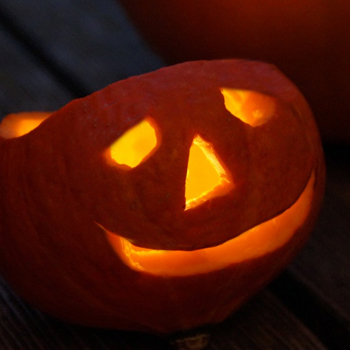 The all-purpose table had been cleared of dinner dishes and now held four pumpkins, two knives, six magic markers, and several squat orange candles. Claire had switched off the harsh overhead fluorescent and dragged two lamps in from the living room, hoping to create the right atmosphere.
 These are unsettling times. Not the first time some of us have experienced unsettling times, mind you. But if age grants us a certain perspective, it also grants those of us who are older a feeling of vulnerability. Amidst all the talk of moving to another country or even another state, the reality is, we mature types have to consider how easily we can get proper healthcare or how easily we can expect to make and keep friends, the absolute sine qua non for getting old.